
A heat pump vs electric resistance heating cost USA comparison starts with a simple physical difference. Electric resistance equipment turns purchased electricity directly into heat, while a heat pump uses electricity to move heat from outdoors into the home. That means the two systems can deliver the same indoor heat while using very different amounts of electricity.
Using the latest U.S. Energy Information Administration residential benchmark of 18.31¢/kWh for July 2026, 1,000 kWh of electricity costs about $183.10. If an electric-resistance heater needs 3,000 kWh to deliver a given seasonal amount of heat, the electricity portion would be about $549.30. If a heat pump delivered the same useful heat while averaging a COP of 3.0, it would use about 1,000 kWh and cost about $183.10 at the same rate. That is a calculation example, not a promise for a particular home. For your own scenario, use the HomeBillLab U.S. Heating Running Cost Calculator.
Table of Contents
Heat pump vs electric resistance heating: the basic cost difference
For resistance heating, the electricity calculation is direct. A 1.5 kW space heater running for one hour uses about 1.5 kWh. At 18.31¢/kWh, that is about 27.5 cents for one hour at full rated input. A central electric furnace, baseboard heater or resistance strip uses the same basic principle: electrical energy is converted into heat at the equipment.
A heat pump is different because its compressor, fans and controls use electricity to transfer heat rather than create all of the delivered heat through resistance. The U.S. Department of Energy’s Heat Pump Systems guidance says modern air-source heat pumps can reduce electricity use for heating by up to 75% compared with electric resistance heating such as electric furnaces and baseboard heaters. The exact reduction for one home depends on climate, equipment, installation, controls and how much auxiliary resistance heat operates.
| Example for equal delivered heat | Electricity used | Cost at 18.31¢/kWh |
|---|---|---|
| Electric resistance | 3,000 kWh | $549.30 |
| Heat pump averaging COP 2.0 | 1,500 kWh | $274.65 |
| Heat pump averaging COP 2.5 | 1,200 kWh | $219.72 |
| Heat pump averaging COP 3.0 | 1,000 kWh | $183.10 |
This table isolates the heating conversion step so the comparison is easy to see. It does not include installation cost, maintenance, duct losses, demand charges, fixed customer charges or differences in how much of the home each system heats.
What COP means for running cost
Coefficient of performance (COP) is a useful heat-pump efficiency measure. ENERGY STAR defines COP as the ratio of the average rate of space heating delivered to the average rate of electrical energy consumed under a specific set of operating conditions. A COP of 3 means the system is delivering heat at three times the rate of its electrical input at that test condition.
That does not mean a heat pump has one fixed COP all winter. Outdoor temperature, indoor setpoint, compressor speed, defrost cycles, airflow, refrigerant charge and system design can change performance. Seasonal ratings such as HSPF2 summarize performance across a defined heating season rather than at a single outdoor temperature.
The current ENERGY STAR heat-pump criteria require at least 7.8 HSPF2 for qualifying split systems and 7.2 HSPF2 for qualifying single-package systems. For the ENERGY STAR cold-climate designation, qualifying split systems also have low-temperature performance requirements, including a COP of at least 1.75 at 5°F and at least 70% of the 47°F heating capacity available at 5°F. Those are certification thresholds, not a forecast of your exact seasonal bill.
Why electric resistance can still make sense for a room
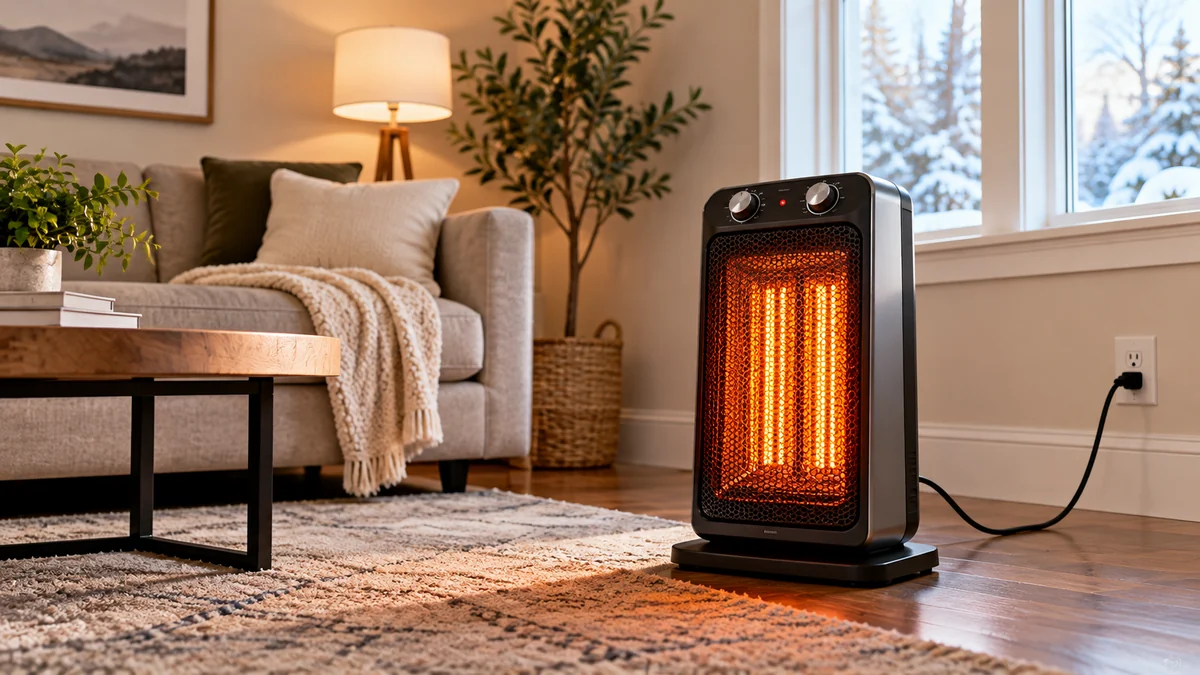
Lower energy use does not automatically mean that a heat pump is the right tool for every heating task. A portable electric space heater can be inexpensive to buy, easy to move and useful when only one occupied room needs temporary heat. If the alternative is turning up a whole-house system just to warm a small room for a short period, the total household cost can depend on how much space is being heated and for how long.
The important comparison is not simply “one heater versus one heat pump.” Compare the same comfort service. Heating one small office for two hours is not the same task as maintaining an entire house at a set temperature through a cold night. If you use resistance heat as a targeted supplement, record its wattage and runtime. Our 1500 watt space heater cost guide shows how the hourly calculation works.
Auxiliary resistance heat can change heat-pump economics
Many ducted heat-pump systems include electric resistance strips as auxiliary or emergency heat. Those strips can provide high heating output, but once they operate, that portion of the load behaves like resistance heating rather than high-COP heat-pump heating.
The DOE Energy Saver guide specifically warns against thermostat setbacks that cause backup electric resistance heat to come on unnecessarily, because that type of heating is more expensive to operate. Modern controls differ, so follow the equipment manufacturer’s guidance rather than assuming every temperature setback will trigger backup heat.
If a heat pump seems unusually expensive to run, check whether auxiliary heat is operating frequently. Causes can include very low outdoor temperatures, an aggressive thermostat recovery setting, equipment sizing, airflow problems, control configuration or a system fault. The electricity meter sees both the compressor and any resistance strips, so a high auxiliary-heat share can narrow the expected efficiency advantage.
How outdoor temperature changes the comparison
A resistance heater’s conversion behavior is comparatively simple: 1 kWh of electricity produces roughly 1 kWh-equivalent of heat at the appliance, before any distribution losses are considered. A heat pump’s performance changes with operating conditions. As outdoor air gets colder, there is less heat available in the air and the system may need to work harder to move it indoors.
That is why cold-climate performance matters when you compare systems in colder parts of the United States. Modern cold-climate equipment is specifically tested for low-temperature capacity and COP. A heat pump can still provide useful heating below freezing, but the cost advantage depends on the particular model, weather and whether backup heat is needed.
Do not use a warm-weather COP number as if it applied to every hour of the heating season. For a more realistic estimate, use annual or seasonal electricity consumption from a load calculation, utility history, manufacturer performance data or a scenario model that reflects your climate.
Electricity price matters, but it does not change the efficiency ratio
The EIA’s July 2026 Electric Power Monthly table reports a U.S. residential average electricity price of 18.31 cents per kWh. State and utility rates can be much lower or higher, so the rate on your own bill is a better input for household budgeting.
| Electricity rate | 3,000 kWh resistance example | 1,000 kWh heat-pump example |
|---|---|---|
| 12¢/kWh | $360 | $120 |
| 15¢/kWh | $450 | $150 |
| 18.31¢/kWh | $549.30 | $183.10 |
| 25¢/kWh | $750 | $250 |
| 30¢/kWh | $900 | $300 |
For a heat pump vs electric resistance heating cost USA estimate, changing the electricity rate changes both dollar totals, but it does not change the assumed three-to-one electricity-use relationship in this simplified example. In a real house, the seasonal COP and auxiliary-heat share determine how wide that gap is.
Ducts, zoning and the amount of space heated
A ducted heat pump can lose useful heat through leaky or poorly insulated ducts, especially when ductwork runs through an attic, crawlspace or garage. A ductless mini-split avoids those duct losses in the zones it serves, but room layout and door positions still affect heat distribution. Resistance baseboards also avoid duct losses because the heat is produced directly in the room.
Zoning changes the cost comparison as well. A mini-split serving one occupied zone may use less energy than conditioning unused rooms. A small resistance heater can also be economical for brief spot heating. The fair question is therefore: how much electricity is required to maintain the comfort level you actually want in the occupied area?
Installation cost and running cost are separate decisions
Electric resistance heaters usually have a lower upfront cost. Portable heaters may require no installation beyond a suitable electrical outlet, while baseboards or electric furnaces are simpler than refrigeration-based heat-pump systems. A heat pump generally has a higher purchase and installation cost because it includes a compressor, refrigerant circuit, indoor and outdoor heat exchangers, controls and associated electrical work.
Running cost is only one part of total ownership. A heat pump can also provide cooling, which can replace or reduce the need for a separate air conditioner. If you are comparing a whole-house replacement, include purchase price, expected life, maintenance, cooling value, rebates or incentives that actually apply, and any electrical-service or ductwork changes. This article intentionally keeps those capital costs separate from the energy-running-cost calculation.
A practical way to compare your own home
- Use your actual electricity rate. Start with the variable cents-per-kWh charge that changes with electricity use. If your utility separates supply and delivery, include the variable components that apply.
- Define the same heating job. Compare the same rooms, thermostat setting and time period.
- For resistance heat, calculate kWh directly. Multiply kW by runtime, allowing for cycling when the heater does not stay on continuously.
- For a heat pump, use seasonal energy or performance data where possible. A single COP at one temperature is not a full-winter estimate.
- Account for auxiliary heat. If resistance strips run often, include that electricity separately.
- Check distribution losses. Duct condition, zoning and building insulation can affect the amount of heating energy required.
You can model electric resistance, heat-pump COP and natural-gas scenarios side by side with the U.S. Heating Running Cost Calculator. For the assumptions used across HomeBillLab calculations, see our methodology.
Heat Pump vs Electric Resistance Heating Cost USA FAs
Is a heat pump always cheaper to run than electric resistance heat?
For the same amount of delivered heat, a heat pump operating above a COP of 1 uses less electricity than resistance heating. Actual household cost still depends on outdoor conditions, system efficiency, auxiliary heat, electricity rates, duct losses and how much space is being heated.
Is a 1500 watt space heater more expensive than a heat pump?
Per unit of delivered heat, a heat pump can use much less electricity. But a portable 1500 watt heater may still be a practical low-cost option for short-term heating of one small occupied room. Compare the same heating task rather than equipment nameplates alone.
Does a heat pump stop working below freezing?
No. Modern air-source heat pumps can operate below freezing, and cold-climate models are tested for low-temperature capacity and efficiency. Performance changes as outdoor temperature falls, and some systems use auxiliary heat during the coldest conditions.
Should I compare HSPF2 or COP?
Use HSPF2 for a standardized seasonal heating-efficiency comparison between rated products, and COP for efficiency at a particular operating condition. For a dollar estimate, you ultimately need expected electricity use and your own electricity rate.
Browse more comparisons and heating guides in the HomeBillLab U.S. heating hub.