A central air conditioner running cost USA estimate is most useful when it starts with the electricity your system actually draws and the price you actually pay per kilowatt-hour. Central air-conditioning costs vary sharply from one home to another because system size, climate, thermostat setting, insulation, duct losses, equipment condition and utility rates all change the result.
Using the latest U.S. Energy Information Administration residential benchmark of 18.31¢/kWh for July 2026, a central air conditioner averaging 3 kW of electrical input would cost about $0.55 per operating hour. If it averaged that input for eight hours in a day, the electricity cost would be about $4.39 for that day. These are examples, not a national promise. For a household-specific estimate, use your own rate and equipment data in the HomeBillLab U.S. Air Conditioner Running Cost Calculator.
Table of Contents
How much does central air conditioning cost per hour?
If you know the system’s approximate electrical input while it is running, the direct relationship is:
Electrical input in kW × electricity rate in $/kWh = electricity cost per operating hour
The EIA’s July 2026 electricity-price table reports a U.S. residential average of 18.31 cents per kWh, with much higher and lower state averages around that national figure. At $0.1831/kWh, the examples below show how electrical input changes the electricity portion of cooling cost.
| Average electrical input | Cost per operating hour at 18.31¢/kWh | Cost for 8 operating hours | 30-day example at 8 h/day |
|---|---|---|---|
| 2.0 kW | $0.37 | $2.93 | $87.89 |
| 2.5 kW | $0.46 | $3.66 | $109.86 |
| 3.0 kW | $0.55 | $4.39 | $131.83 |
| 3.5 kW | $0.64 | $5.13 | $153.80 |
| 4.0 kW | $0.73 | $5.86 | $175.78 |
Real systems do not necessarily draw one fixed power level all day. Single-stage equipment cycles on and off, while multi-stage and variable-speed systems can operate for longer periods at lower output. Treat the kW figure as an average operating input for the period you are estimating rather than assuming the nameplate maximum is continuously used.
Why your electricity rate matters so much
The same air conditioner can have very different running costs in different states or utility territories. A 3 kW system costs about $0.45 per operating hour at 15¢/kWh, $0.75 at 25¢/kWh and $0.90 at 30¢/kWh. That is why the rate on your own bill is a better input than a national average.
If your bill separates supply and delivery charges, use the variable cents-per-kWh components that actually increase when you consume more electricity. Fixed monthly customer charges normally should not be assigned to one appliance unless you are intentionally calculating the full household bill. See the HomeBillLab U.S. electricity cost per kWh guide for a practical breakdown.
SEER2 is an efficiency rating, not an exact power draw
Central air conditioners are commonly compared using SEER2, the current seasonal cooling-efficiency metric used in federal testing. The U.S. Department of Energy’s central air-conditioner and heat-pump standards page explains that current DOE test procedures measure seasonal cooling efficiency using SEER2 and related metrics. A higher SEER2 generally indicates better seasonal cooling efficiency for comparable equipment.
SEER2 should not be treated as if it were a wattage number. It combines cooling delivered and electrical energy used over standardized test conditions. Actual household electricity use still depends on weather, indoor temperature targets, system sizing, airflow, cycling, duct performance and the amount of time the equipment operates.
If you have model-specific annual kWh from reliable documentation, that can be a practical input for an annual cost estimate. If you have measured electrical input, use the kW-and-hours method. If you only have cooling capacity and SEER2, use it for efficiency comparison rather than forcing it into a simplistic exact cost-per-hour conversion.
EnergyGuide can help you compare systems
The Federal Trade Commission’s Energy Labeling Rule covers central air conditioners and requires EnergyGuide information so buyers can compare the efficiency and operating-cost context of similar products. For central HVAC equipment, the label and associated product information are more useful for comparing properly matched systems than a single marketing claim about capacity.
Remember that any annual dollar estimate on standardized consumer information is based on assumptions. Your local electricity price can differ substantially, and the cooling load of a house in Phoenix is not the same as the load of a house in Seattle. Use the efficiency data to compare models, then apply your own rate and realistic usage assumptions when estimating dollars.
Installation quality can change real-world cost
Equipment efficiency is only part of the story. DOE’s residential central air-conditioner purchasing guidance warns that oversizing, improper refrigerant charging and leaky ducts can reduce performance, increase energy use and shorten equipment life. Correct sizing and installation therefore matter alongside the rated efficiency.
An oversized system may cool the home quickly and shut off frequently, which can reduce comfort and dehumidification. An undersized system can struggle during high-load periods. A qualified contractor normally performs a load calculation rather than selecting equipment from floor area alone. The goal is not simply to install the largest available condenser.
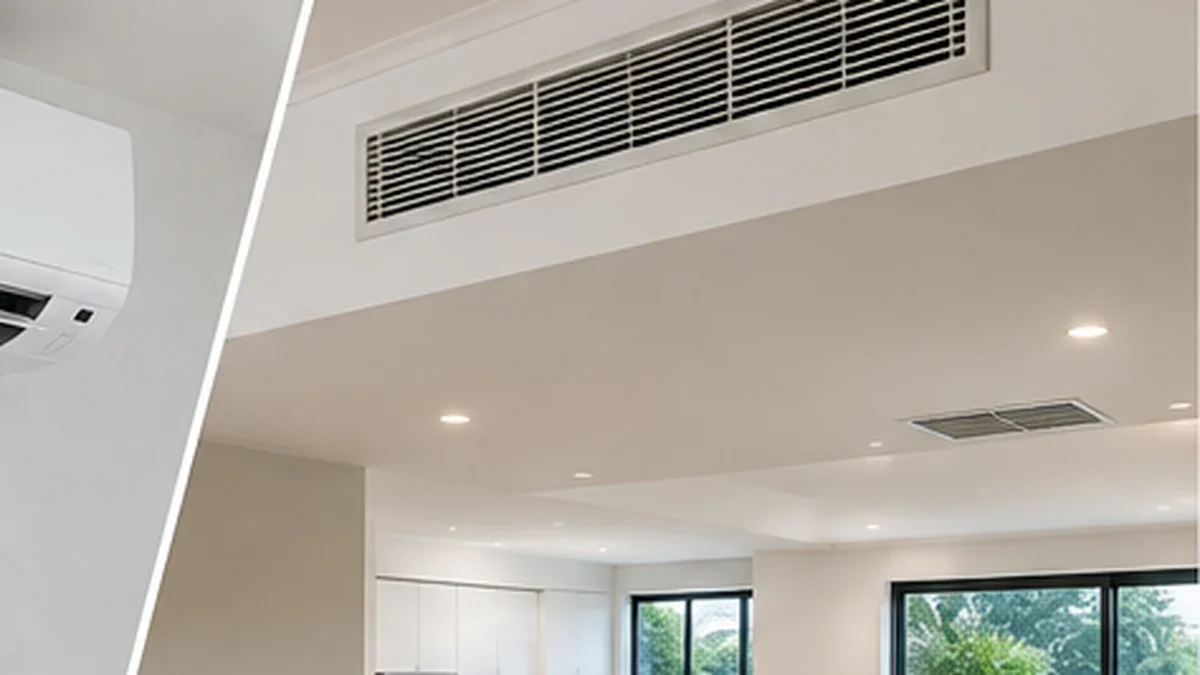
Duct condition also matters in homes with central forced-air distribution. Air lost into an attic, crawlspace or other unconditioned area still required electricity to cool, even though it never reached the rooms where you wanted it. Sealing and insulating ducts can therefore affect the relationship between the equipment’s rated efficiency and the household’s actual cooling cost.
Thermostat settings and runtime drive monthly cost
A central AC bill is driven by both power and time. Hotter outdoor conditions, lower thermostat setpoints, more sun exposure, weak insulation and high internal heat gains can all increase runtime. A system that costs 55 cents per operating hour is inexpensive if it runs briefly, but much more noticeable if it operates for many hours each day through a heat wave.
When comparing two thermostat strategies, keep the electricity rate constant and compare measured or estimated operating hours over the same weather period. Avoid assuming that the compressor runs continuously from the moment the thermostat is set until the end of the day. Cycling and variable-speed behavior can make simple clock-time estimates inaccurate.
Why a clean filter and clear outdoor unit matter
Airflow restrictions make the system work harder to move conditioned air through the home. Replacing or cleaning filters according to the equipment manufacturer’s instructions and keeping return grilles unobstructed are basic maintenance steps. The outdoor condenser also needs adequate airflow around its coil; leaves, debris and dense vegetation can interfere with heat rejection.
Maintenance will not turn an inefficient or badly sized system into a high-efficiency one, but it helps the installed equipment operate closer to its intended condition. If cooling performance changes suddenly, utility use spikes or the system is short-cycling, the cause may be mechanical or installation-related rather than simply higher electricity prices.
What changed with ENERGY STAR central air conditioners in 2026?
This is an important freshness point for 2026. EPA’s ENERGY STAR specification history page states that the central-air-conditioner portion of the specification was sunset on February 2, 2026. Heat-pump certification continues under the current heat-pump specification, but shoppers should not assume that a central AC product carries a current ENERGY STAR certification simply because an older page, label or product listing used that branding.
For a central AC purchase in 2026, focus on the model’s current SEER2/EER2 ratings, the matched indoor and outdoor equipment, contractor sizing and installation quality, warranty and local utility incentives. For a heat pump, use current heat-pump certification criteria rather than old central-AC qualification language.
Central AC cost examples at different electricity prices
Suppose a system averages 3 kW while operating. The table below isolates the electricity-rate effect:
| Electricity rate | Cost per operating hour at 3 kW | Cost for 8 operating hours |
|---|---|---|
| 12¢/kWh | $0.36 | $2.88 |
| 15¢/kWh | $0.45 | $3.60 |
| 18.31¢/kWh | $0.55 | $4.39 |
| 25¢/kWh | $0.75 | $6.00 |
| 30¢/kWh | $0.90 | $7.20 |
The 3 kW input is illustrative. Your own system may average less or more depending on capacity, compressor stage, fan power and operating conditions. If you have whole-home interval data, compare similar weather days with and without heavy AC use to understand how cooling affects household consumption.
Central air conditioner running cost USA FAQ
Does a 3-ton air conditioner use 3 kW?
Not necessarily. “Tons” describe cooling capacity, not electrical input. Two 3-ton systems can draw different electrical power because their efficiencies and operating conditions differ.
Can I estimate cost from SEER2 alone?
SEER2 is best used as a seasonal efficiency comparison metric. For a household dollar estimate, measured or documented electrical input, annual kWh and your own electricity rate give a clearer calculation.
Is central air cheaper to run than window AC?
There is no universal answer. Central AC cools multiple rooms and has duct losses, while a room unit may cool only one zone. Compare the amount of space cooled, equipment efficiency, runtime and electricity use rather than cost per hour alone.
Should I include fixed utility charges?
Usually not when estimating the incremental cost of running the air conditioner. Include variable electricity charges that change with kWh consumption. Fixed customer charges are normally part of the household bill regardless of whether the AC runs.
For the assumptions used across HomeBillLab calculations, see our methodology. Browse more cooling guides in the U.S. air-conditioning hub.