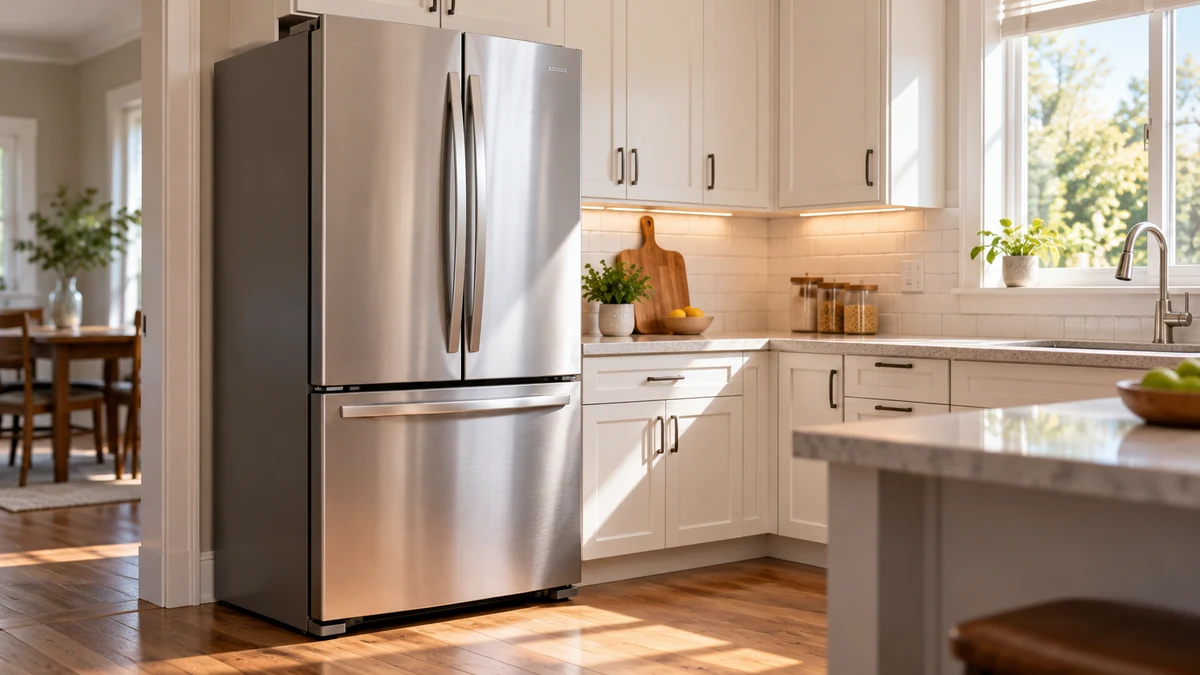
A refrigerator running cost USA estimate is easiest when you start with the refrigerator’s annual energy use in kilowatt-hours, not just its nameplate wattage. Refrigerators cycle on and off throughout the day, so a one-time watt rating does not tell you how many kilowatt-hours the appliance will use over a full year. If your refrigerator has an EnergyGuide label or a manufacturer energy specification, the annual kWh figure is usually the most useful starting point.
Using the latest U.S. residential electricity price available from the U.S. Energy Information Administration, 18.31¢/kWh for July 2026, a refrigerator that uses 400 kWh per year would cost about $73.24 per year in variable electricity charges. Your actual cost can be lower or higher because electricity rates vary by state, utility and rate plan. For a household-specific estimate, enter the annual kWh from your own refrigerator into the HomeBillLab U.S. Appliance Running Cost Calculator.
Table of Contents
How much does a refrigerator cost to run per year?
The basic annual-cost formula is simple:
annual refrigerator kWh × electricity rate in dollars per kWh = annual running cost
EIA’s July 2026 state electricity price table reports a U.S. residential average of 18.31¢/kWh. Converting that to dollars gives $0.1831 per kWh. At that benchmark, the same formula produces the following examples:
| Annual refrigerator energy use | Annual cost at 18.31¢/kWh | Average monthly cost |
|---|---|---|
| 300 kWh/year | $54.93 | $4.58 |
| 400 kWh/year | $73.24 | $6.10 |
| 500 kWh/year | $91.55 | $7.63 |
| 600 kWh/year | $109.86 | $9.16 |
| 800 kWh/year | $146.48 | $12.21 |
These are arithmetic examples, not typical-model claims. The correct kWh figure for your refrigerator depends on the model, size, configuration, age, ambient conditions and how it is used.
Use the EnergyGuide annual kWh, not the yellow-label dollar figure alone
Most new refrigerators sold in the United States carry an EnergyGuide label. The Federal Trade Commission explains that the label shows how much energy an appliance uses and lets shoppers compare it with similar products. The FTC’s consumer guide to EnergyGuide labels also makes an important point: the estimated annual operating cost on the label is only an estimate based on typical use and a national average energy price. Your local rate and actual use can produce a different result.
For a current HomeBillLab calculation, the annual kWh/year value is more reusable than the label’s printed dollar estimate. Multiply that kWh figure by the electricity rate that applies to your own home. If you pay 25¢/kWh, for example, a 400 kWh/year refrigerator costs about $100 per year in variable electricity charges. At 15¢/kWh, the same 400 kWh/year model costs about $60.
The FTC’s EnergyGuide labeling FAQs note that annual energy cost and efficiency information is based on Department of Energy test procedures, and refrigerators are among the appliance types required to have EnergyGuide labels. That makes the label a useful model-specific reference point, while your own utility rate makes the cost estimate household-specific.
Why refrigerator wattage can mislead running-cost estimates
A refrigerator does not normally draw its maximum electrical input every minute of the day. The compressor cycles, fans switch on and off, defrost systems operate periodically, and door openings add changing cooling loads. If you take a nameplate wattage and multiply it by 24 hours a day for 365 days, you can greatly overstate annual energy use.
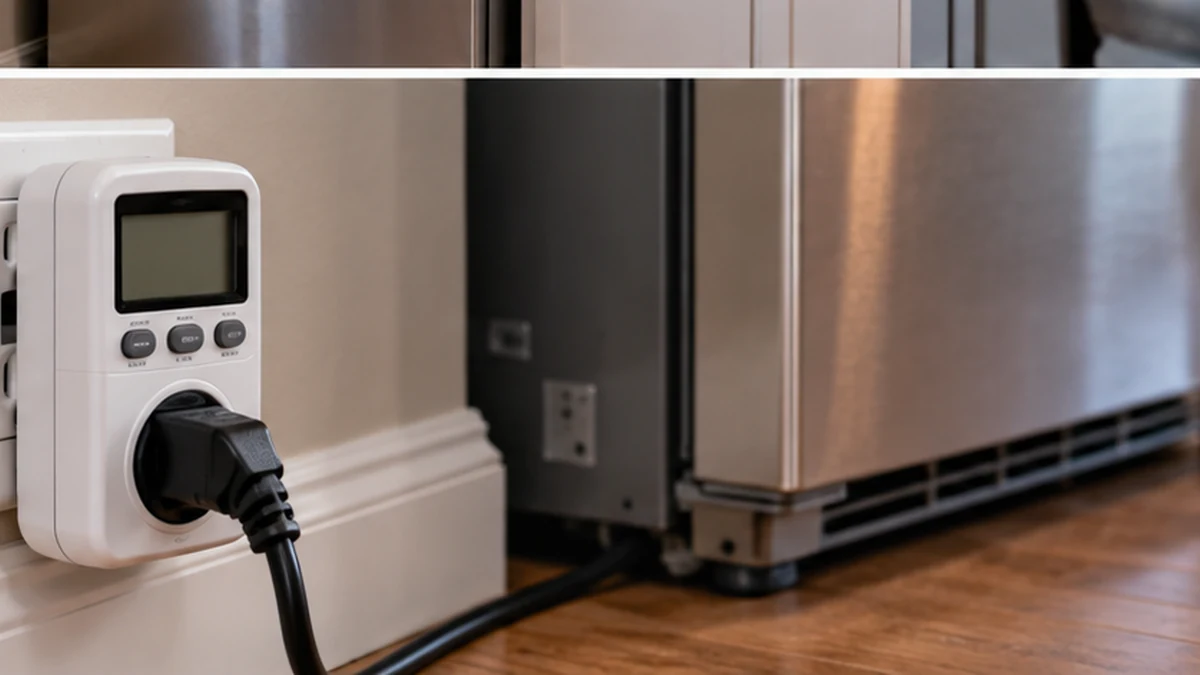
If you do not have an annual kWh figure, a plug-in energy monitor can be useful for a refrigerator that plugs into a normal accessible outlet. Measure over several days rather than a few minutes so compressor cycles and defrost events have time to appear in the total. Then convert the measured daily average into a monthly or annual scenario. Always follow the appliance manufacturer’s electrical and safety instructions when accessing the plug.
How electricity price changes refrigerator cost by location
The refrigerator can use exactly the same number of kilowatt-hours in two homes while the dollar cost differs because the electricity rate is different. EIA’s July 2026 residential data show wide state variation, which is why a national average should be treated as context rather than a quote for a specific household.
| Example residential rate | Cost of 400 kWh/year |
|---|---|
| 12.72¢/kWh | $50.88/year |
| 18.31¢/kWh | $73.24/year |
| 24.16¢/kWh | $96.64/year |
| 33.61¢/kWh | $134.44/year |
| 48.00¢/kWh | $192.00/year |
The rate examples above illustrate how much the same 400 kWh/year load can vary in cost. For your own estimate, use the variable cents-per-kWh rate that actually applies to additional consumption. If your bill separates supply and delivery charges and both change with kWh use, include the applicable variable components. Our U.S. electricity cost per kWh guide explains the difference between state benchmarks, tariff rates and an all-in effective bill rate.
Do ENERGY STAR refrigerators cost less to run?
For otherwise comparable models, lower annual kWh generally means lower electricity cost at the same rate. ENERGY STAR’s current refrigerator guidance says certified refrigerators are about 9% more energy efficient than models that meet the federal minimum energy efficiency standard. ENERGY STAR also notes that size and configuration matter: larger refrigerators generally use more energy, and top-freezer models tend to use less energy than bottom-freezer or side-by-side configurations.
Do not turn the 9% figure into a fixed dollar saving for every household. The dollar difference depends on the two models’ actual annual kWh and on your electricity rate. The cleanest comparison is to place the EnergyGuide kWh/year figures side by side, subtract the lower figure from the higher one, then multiply the kWh difference by your rate.
What can make a refrigerator use more electricity?
Real-world energy use can move above or below a standardized estimate. ENERGY STAR recommends keeping a refrigerator at 35–38°F, positioning it away from heat sources such as an oven or direct sunlight, allowing air circulation behind it, checking door seals and minimizing the amount of time the door is left open. Those factors all affect how hard the appliance has to work to maintain its set temperature.
- Warm surroundings: a hot garage or a location beside an oven can increase the cooling load.
- Poor door seals: leaking gaskets allow warm room air into the cabinet.
- Frequent or long door openings: each opening replaces some cold air with warmer air.
- Blocked ventilation: insufficient airflow around the appliance can make heat rejection harder.
- Older equipment: age alone does not define consumption, but older designs can use more energy than a newer efficient model.
If a refrigerator suddenly appears to be using much more electricity than its historical pattern, first check simple causes such as temperature settings, door closure, ice buildup where applicable and ventilation. A large or persistent change may justify checking the appliance manual or having the appliance inspected rather than assuming the electricity tariff is the only cause.
What about a second refrigerator in the garage or basement?
A second refrigerator adds a second year-round appliance load. ENERGY STAR specifically recommends considering replacement or recycling of an old second refrigerator and notes that older refrigerators can use more energy than certified new models. If the extra refrigerator is only needed around holidays or special events, leaving it unplugged when genuinely not needed can avoid months of unnecessary consumption.
For a second-fridge decision, compare the annual kWh of the old appliance with the annual kWh of the replacement you are considering. The difference in kWh, multiplied by your electricity rate, gives an estimate of annual energy-cost savings. Purchase price, repair risk, capacity and food-storage needs are separate factors and should not be hidden inside the running-cost calculation.
Monthly cost versus annual cost
Dividing the annual estimate by 12 gives a convenient average monthly figure, but refrigerator consumption is not guaranteed to be identical every month. Hotter room temperatures, seasonal household use and defrost behavior can change short-term consumption. A 400 kWh/year figure corresponds to an annual average of about 33.3 kWh per month, not a promise that every individual month will land at that number.
For budgeting, annual kWh from EnergyGuide is usually adequate. For diagnosing a specific appliance or checking whether your real refrigerator matches expectations, measured kWh over a longer period is more informative. The U.S. Appliance Running Cost Calculator supports both an annual-kWh method and direct wattage/runtime scenarios for appliances where those inputs make sense.
Refrigerator running cost FAQ
How much does a 400 kWh refrigerator cost to run?
At the July 2026 U.S. residential average of 18.31¢/kWh, 400 kWh costs about $73.24 per year, or about $6.10 per month on an annual-average basis. Use your own electricity rate for a household-specific estimate.
Should I use watts or kWh/year for a refrigerator?
Use annual kWh when it is available. Refrigerators cycle rather than drawing a fixed wattage continuously, so annual kWh from EnergyGuide or reliable product data is usually a better annual-cost input than multiplying nameplate watts by 8,760 hours.
Does the running cost include my utility’s fixed monthly charge?
Normally no. When estimating the incremental cost of one refrigerator, HomeBillLab uses the electricity charges that change with kWh consumption. A fixed customer charge that you pay regardless of refrigerator use is not assigned entirely to that appliance.
Is the EnergyGuide dollar amount my exact annual cost?
No. The FTC says the operating-cost figure is an estimate based on typical use and a national average energy price. Use the label’s annual kWh with your own current electricity rate when you want a more relevant local estimate.
Bottom line
For a practical refrigerator running cost USA estimate, find the appliance’s annual kWh, multiply it by your own electricity rate, and treat national or state averages as benchmarks rather than quotes. At the July 2026 U.S. residential average of 18.31¢/kWh, every 100 kWh of annual refrigerator use costs about $18.31. That makes the calculation easy to update when your tariff changes or when you compare two refrigerator models.
Explore more U.S. appliance running-cost guides, or review the HomeBillLab methodology for how rates, formulas and source updates are handled.