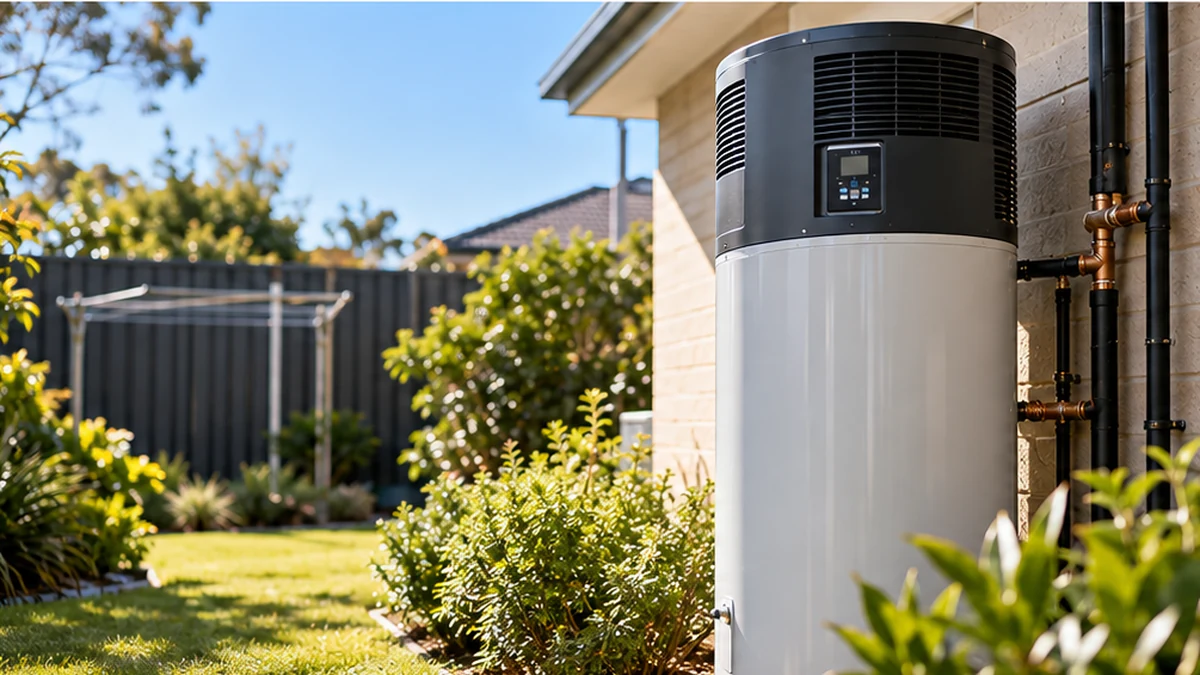
Heat pump hot water rebates Australia support is not one national cash rebate. In September 2026, the main Australia-wide support is the Small-scale Renewable Energy Scheme (SRES), which can reduce the upfront price of an eligible air-source heat-pump water heater through small-scale technology certificates (STCs). On top of that, some states and territories offer their own rebates, certificate-based discounts or concessional finance.
The biggest state-level offers currently sit in New South Wales, Victoria and the ACT, but the rules are different in each place. In other jurisdictions, an eligible system can still receive STC support and there may be local, retailer, concession or finance programs. The safest approach is to check the current government program before accepting a quote, because rebate amounts, eligible products and application steps can change.
Use the HomeBillLab Energy Rebate & Upgrade Cost Calculator to compare the installed price, confirmed incentives and your out-of-pocket cost. For our calculation rules, see the Methodology. You can also browse the Rebates guides or start with our broader Australian home energy rebates guide.
Table of Contents
Quick state-by-state rebate summary
| Location | Heat-pump hot-water support reviewed 11 Sep 2026 | What to check |
|---|---|---|
| Australia-wide | Eligible systems may create STCs under the SRES | Exact model, postcode zone, installation date and STC treatment in the quote |
| NSW | Energy Savings Scheme upfront hot-water upgrade discount; enhanced offer also exists in selected postcodes | Existing system type, eligible model, accredited provider and postcode |
| Victoria | Solar Homes hot-water rebate plus possible Victorian Energy Upgrades discount | Income/property rules, existing system age, eligible product and authorised/accredited provider |
| ACT | Targeted Home Energy Support rebate for eligible homeowners; Sustainable Household Scheme finance is also available | Concession/eligibility rules, approved provider and finance conditions |
| Queensland | No general statewide household heat-pump hot-water cash rebate identified in the official government listings reviewed; STCs may apply | Energy.gov.au rebate finder, local programs and current retailer offers |
| South Australia | No general statewide household heat-pump hot-water cash rebate identified in the official government listings reviewed; STCs may apply | Energy.gov.au rebate finder, local programs and current retailer offers |
| Western Australia | No general statewide household heat-pump hot-water cash rebate identified in the official government listings reviewed; STCs may apply | Energy.gov.au rebate finder, local programs and current retailer offers |
| Tasmania | No general statewide household heat-pump hot-water cash rebate identified in the official government listings reviewed; STCs may apply | Energy.gov.au rebate finder, local programs and current retailer offers |
| Northern Territory | No general territory-wide household heat-pump hot-water cash rebate identified in the official government listings reviewed; STCs may apply | Energy.gov.au rebate finder, local programs and current retailer offers |
The entries above are a navigation guide, not an eligibility decision. The Australian Government’s rebates and assistance finder is the best national starting point for checking newer programs, concessions and local offers that may not be part of a permanent statewide scheme.
Australia-wide support: STCs for eligible heat-pump water heaters
The federal support that matters in every state and territory is the Small-scale Renewable Energy Scheme. Eligible air-source heat-pump water heaters can create STCs, which have a market value. In practice, the installer or retailer will often assign or sell the certificates and show their value as a discount in the quote rather than asking the household to trade certificates itself.
There is no single fixed STC dollar rebate for every heat pump. The Clean Energy Regulator explains that certificate entitlements depend on factors including the system, where it is installed and when it is installed. The Clean Energy Regulator register lists eligible solar water heaters and air-source heat-pump models. If a model is not on the applicable register or the installation does not meet the scheme requirements, the expected STC value may not be available.
For that reason, ask for the quote to show the pre-incentive price, the STC value being assigned and any separate state incentive. That makes it easier to compare two installers on the same basis and avoids treating an advertised “rebate” as if it were all government cash.
New South Wales: Energy Savings Scheme hot-water discounts
NSW households and small businesses may be eligible for an upfront discount when replacing an existing hot-water system with an approved efficient heat-pump or solar hot-water system. The current NSW Government hot water upgrade incentive says indicative discounts can be up to $640 when replacing an electric water heater with a heat-pump water heater, or up to $330 when replacing a gas water heater with a heat pump.
Those figures are not guaranteed quotes. The NSW Government notes that the actual discount can vary with the model, installer, location, services required and certificate value. The discount is normally applied upfront by an installer working with an Accredited Certificate Provider, and the customer must still make a minimum contribution.
NSW also has a time-limited larger heat-pump water-heater discount for homeowners in selected postcodes. That offer is available until June 2027 or until funding is exhausted, and participating businesses must confirm the property and model are eligible. If your postcode is outside that offer, the standard Energy Savings Scheme hot-water incentive may still be available.
Do not choose a system from the advertised discount alone. Compare the final installed quote, tank size, noise, warranty, placement and expected electricity use. Our heat-pump hot-water running cost guide can help you estimate the ongoing side of the decision.
Victoria: Solar Homes rebate and Victorian Energy Upgrades
Victoria currently has the most obvious stacking opportunity, but it also has detailed eligibility rules. The Solar Victoria hot water rebate provides up to $1,000 for eligible heat-pump or solar hot-water products, or up to $1,400 for an eligible product that meets the program’s locally made criteria. The rebate is calculated after other discounts have been applied and is capped at 50% of the eligible product purchase price.
As of 1 July 2026, Solar Victoria says the combined taxable income of all owners must be below $150,000 a year, the property must be valued under $3 million, the address must satisfy the program’s previous-rebate rules, and the hot-water system being replaced generally needs to be at least three years old. You also need an authorised retailer and an eligible product. Emergency replacement rules exist, but eligibility still needs to be proven.
Separate from Solar Homes, the Victorian Energy Upgrades hot-water discount is a certificate-based discount offered through accredited providers. Current Victorian guidance lists indicative discounts up to $630 when replacing an inefficient electric hot-water system with a heat pump and up to $560 when replacing an inefficient gas system with a heat pump.
These programs can sometimes be combined, but do not simply add headline maximums yourself and assume that is the rebate you will receive. Victorian Energy Upgrades is market-based, certificate values can move, Solar Homes applies its rebate after other discounts, and the installed product has to meet each program’s rules. Get a written quote showing each discount separately before deciding.
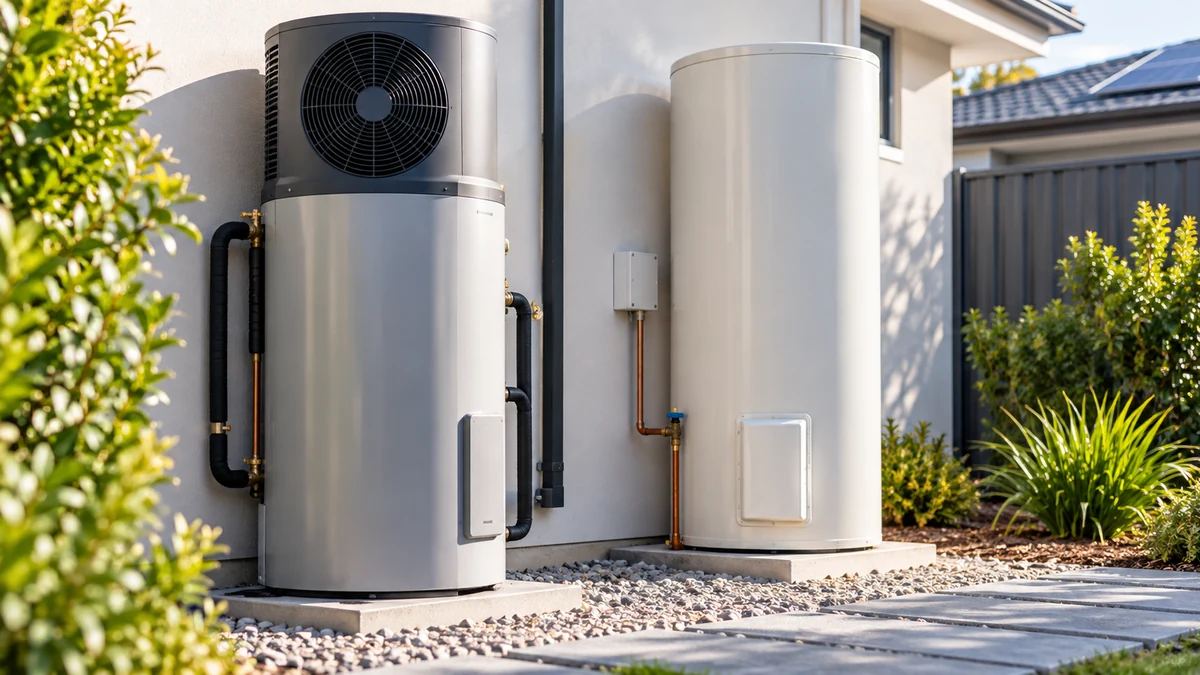
A larger rebate does not automatically make a heat pump the right purchase. Compare the final installed cost with a suitable alternative and then compare expected running cost. Our heat pump vs electric hot water comparison separates the technology decision from the incentive calculation.
ACT: targeted rebates plus low-interest finance
The ACT has two different forms of support that should not be described as the same thing. The Home Energy Support Program provides targeted rebates for eligible homeowners. For the efficient-product component, eligible households can receive 50% of supply and installation cost up to $2,500 for products that include hot-water heat pumps, reverse-cycle heating and cooling, electric cooking and ceiling insulation.
This rebate is targeted rather than universal. ACT guidance identifies eligible concession-card households and requires the program’s eligibility and product conditions to be met. Households should confirm current criteria before making a purchase commitment.
The separate Sustainable Household Scheme offers eligible participants low-interest loans from $2,000 to $20,000 for approved energy-efficient products, including hot-water heat pumps and installation costs. A loan reduces the upfront cash burden but is not a rebate: it still has to be repaid, so include repayments and financing conditions when comparing options.
Queensland, South Australia, Western Australia, Tasmania and the Northern Territory
For standard owner-occupiers, we did not identify a general statewide or territory-wide heat-pump hot-water cash rebate in the official government listings reviewed on 11 September 2026 for Queensland, South Australia, Western Australia, Tasmania or the Northern Territory. That does not mean there is never any assistance available in those places.
An eligible heat-pump water heater can still receive Australia-wide STC support. In addition, governments can run targeted programs for social housing, concession households, specific regions or limited funding rounds; councils can offer local schemes; and retailers or finance providers can have separate offers. Check the Australian Government rebates finder using your state and “hot water” before ordering a system.
Be especially careful with third-party advertising that uses phrases such as “government rebate” without separating STCs from a state program or installer promotion. Ask which government scheme the discount comes from, which certificate or rebate is being assigned, whether the model is eligible, and what the final price would be without each incentive.
Can you combine STCs and a state rebate?
Often, but not automatically. Victoria explicitly structures its Solar Homes hot-water rebate after other discounts such as STCs and Victorian Energy Efficiency Certificates have been applied. NSW installers may also incorporate different certificate-based incentives into the quote. The exact interaction depends on the program, eligible activity and model.
Use this comparison sequence:
- Get the full supply-and-install price before incentives.
- Identify the STC value included in the quote.
- Identify any state or territory rebate or certificate discount separately.
- Add required customer contributions, electrical work, plumbing, switchboard changes or disposal costs.
- Enter the confirmed figures into the Energy Rebate & Upgrade Cost Calculator.
This prevents double-counting. If an installer advertises a price “after rebates”, ask for the underlying numbers before comparing that quote with another supplier.
What should you check before applying?
First, check the existing hot-water system. Several programs calculate the incentive from what is being replaced, and a gas-to-heat-pump upgrade can have a different certificate value from an electric-storage-to-heat-pump upgrade. Second, confirm the exact model is eligible. “Heat pump” as a product category is not enough.
Third, check the installer and retailer requirements before work starts. Some programs require an authorised retailer, accredited certificate provider or approved installer, and retrospective claims may be restricted. Fourth, check whether the scheme needs pre-approval, proof of income, proof of ownership, a minimum customer contribution or a specific warranty.
Finally, keep the rebate decision separate from system suitability. A well-sized unit in an appropriate location with a good warranty may be better value than the cheapest rebated system. Consider noise, cold-weather performance, tank capacity, backup element behaviour and whether you can schedule heating around rooftop solar.
Worked example: compare the net upgrade cost, not the headline rebate
Suppose an installer quotes an illustrative installed price of $4,800 before incentives. The quote includes $700 of STC value and a separately confirmed $600 state or certificate-program discount. The net installed cost would be:
$4,800 − $700 − $600 = $3,500
If another installer advertises a $3,350 “after rebate” price but charges $450 for required electrical work that is excluded from the headline figure, the comparable total becomes $3,800. The bigger advertised discount has not produced the lower final cost.
These figures are deliberately illustrative. Use the actual pre-incentive price and confirmed incentive amounts from your quotes rather than substituting the example as an Australian benchmark.
FAQ about Heat Pump Hot Water Rebates Australia
Is there a federal heat-pump hot-water rebate in Australia?
The main Australia-wide support is the SRES. Eligible heat-pump water heaters can create STCs that have a market value and are commonly assigned through the installer or retailer. It is not a fixed cash rebate with one national dollar amount.
How much is the NSW heat-pump hot-water discount?
The NSW Government currently gives indicative Energy Savings Scheme figures of up to $640 for replacing an electric water heater with a heat pump and up to $330 for replacing gas. Actual discounts vary. Selected postcodes also have a larger, time-limited offer until June 2027 or until funding is exhausted.
How much is the Victorian hot-water rebate?
Eligible households can receive up to $1,000 for eligible products or up to $1,400 for eligible locally made products under Solar Homes. Separate Victorian Energy Upgrades discounts may also be available, subject to their own rules and certificate values.
Can I get a rebate after the system is installed?
Do not assume so. Some schemes require pre-approval or specific providers, and retrospective claims may be limited. Check the relevant government program before paying a deposit or authorising installation.
Does every heat-pump water heater qualify for STCs?
No. The system must meet SRES requirements and the relevant model must be listed on the Clean Energy Regulator register. The exact certificate entitlement also depends on the installation circumstances.
The practical takeaway
Heat-pump hot-water incentives can materially reduce upfront cost, but there is no single rebate that applies equally across Australia. Start with STC eligibility, then check your state or territory, then compare complete installed quotes rather than headline discount amounts.
For NSW, Victoria and the ACT, current government programs can add meaningful support when the household, existing system, product and provider satisfy the rules. In other states and territories, STCs remain the main broad support identified in our September 2026 review, with targeted or local programs worth checking through the government rebates finder.